
Know your sand and aggregate moisture before the batch, not after the pour.
A portable TDR meter reads through roughly a litre of material and returns gravimetric moisture in about two seconds — at the stockpile, without an oven and without a laboratory. Sand typically runs 2 to 6 percent, coarse aggregate under 2. Both move enough to matter.
Sand & aggregate · 0–32 mm · 15 factory calibrations

Moisture changes at every stage
Sand arrives wet and variable. It gets dosed, mixed, and delivered. A reading at one point does not describe the others.
Portable or inline
Two different jobs. A portable meter answers “what is this pile doing right now.” An inline sensor answers “what is every batch doing, automatically.” Most plants end up running both.
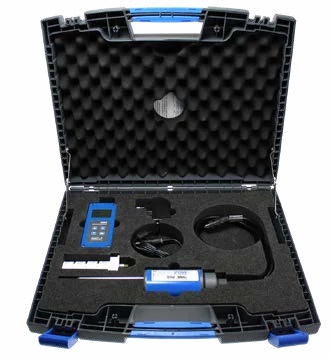
Portable sand moisture meters
HD2 handheld with SONO M1, M1C or M2 probes. Spot readings from stockpiles, incoming loads and bins. Reading in about two seconds.
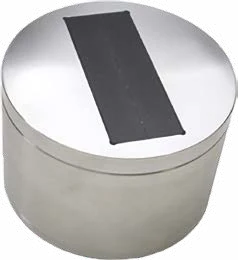
Inline moisture sensors
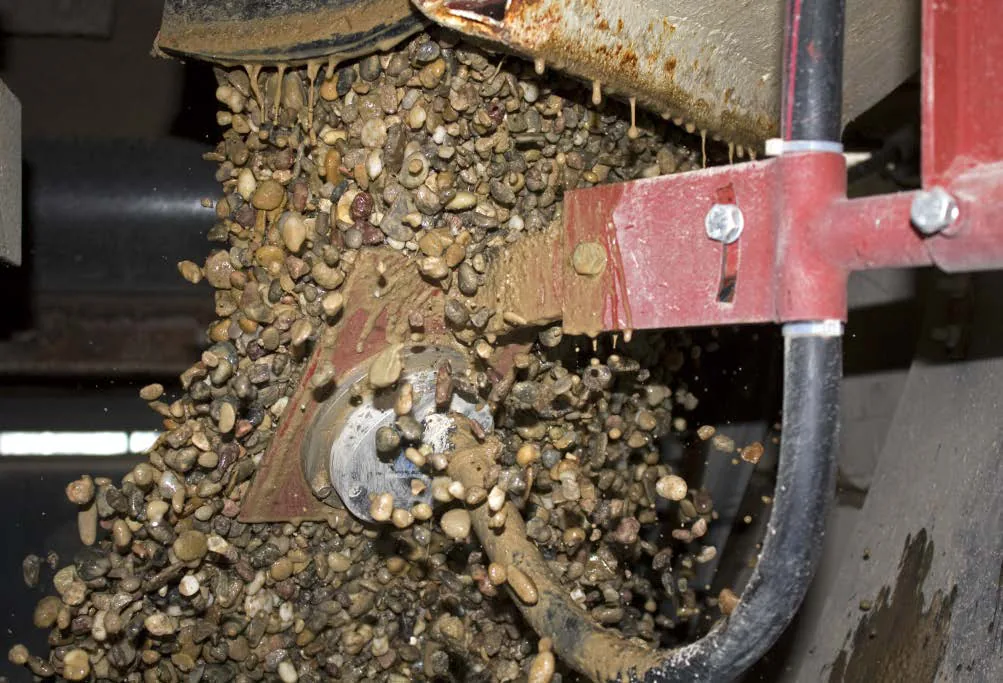
SONO VARIO, SILO and MIX probes fixed under the silo flap, on the belt or in the mixer. Continuous moisture into your PLC or batch controller.
The reading does not drift as the probe wears
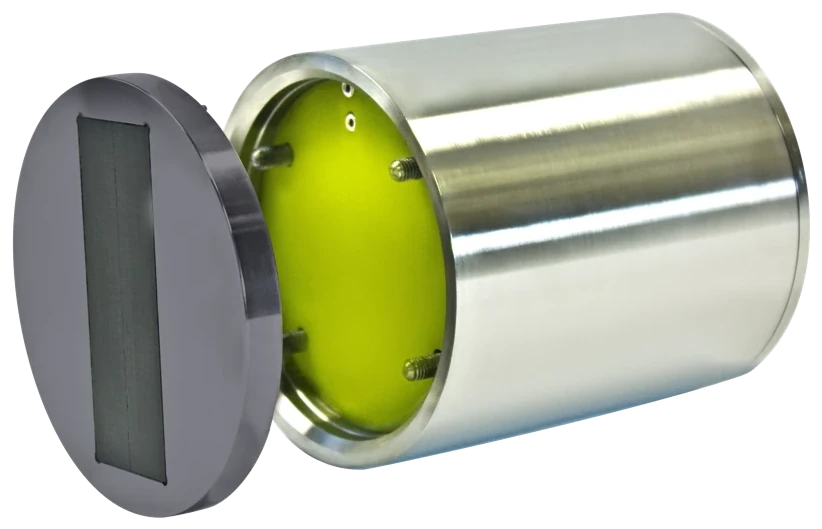
Time Domain Reflectometry sends a guided radar pulse along the sensor surface and times its return to a resolution of one picosecond. The material is read layer by layer, in disks, through a defined measuring field.
Two consequences matter on a batch plant. Abrasion on the probe surface does not change the measuring distance, so accuracy holds as the head wears — and wear never requires recalibration. And the measuring conductor sits between two ceramic plates in direct contact with the material, so nothing is measured through a cover.
- Measuring geometry does not change over time
- Not sensitive to variations in the grading curve
- Moisture, temperature and electrical conductivity from one probe
- 15 factory calibrations; custom materials can be added
Two families, split by conductivity
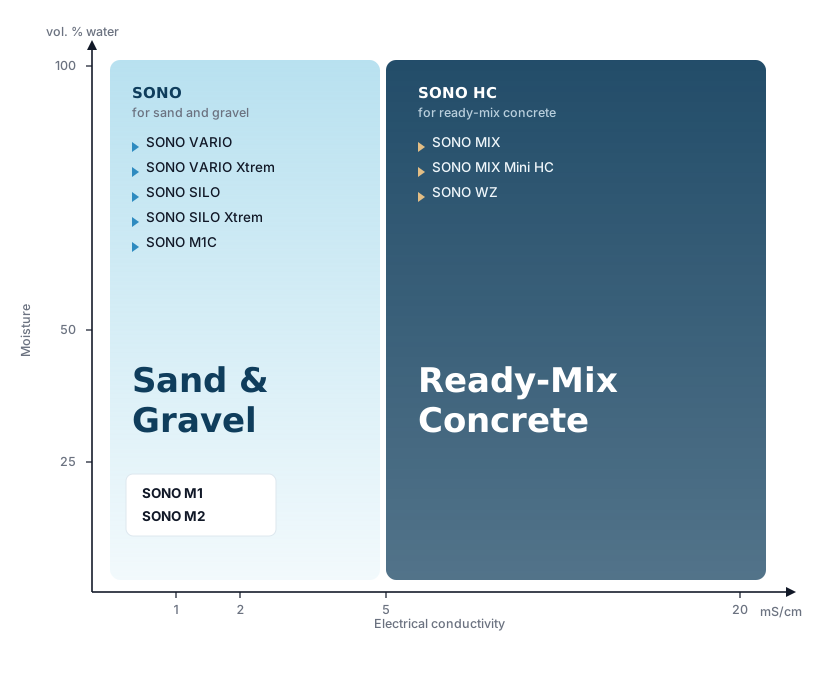
Every probe in the range sits somewhere on this chart. The vertical axis is how much water the material carries; the horizontal axis is how electrically conductive it is. Conductivity is what divides the range in two, and it is the axis most people ignore until a probe reads badly.
Sand, gravel and crushed stone sit on the left. Ready-mix concrete sits on the right, because cement paste is ionic and conducts. A probe built for the left of this chart will not resolve properly on the right.
What moisture should your material be running
Sand carries most of the free water in a concrete mix and moves the most. Coarse aggregate sits lower and steadier. These are working ranges, not specification limits.
| Material | Typical moisture % | Particle size | Note |
|---|---|---|---|
| Concrete sand | 2.0–6.0 | 0–4 mm | The largest single moisture variable in the mix. |
| Coarse aggregate | 0.5–2.0 | 4–32 mm | Lower and steadier than sand, but not zero. |
| Crushed stone | 0.5–2.0 | 4–32 mm | Angular material, abrasive on inline heads. |
| Gravel | 0.5–2.0 | 4–32 mm | Rounded, free-draining, moisture sits low. |
| RAP | 1.0–5.0 | up to 32 mm | Recycled asphalt pavement. Drives burner fuel cost. |
| Foundry return sand | 2.0–7.0 | 0–4 mm | Conductive. Use the coated-rod M1C. |
| Blast furnace slag | variable | 0–32 mm | High conductivity — coated rods required. |
| Fly ash | variable | powder | Conductive fine material. |
| Expanded clay | variable | up to 32 mm | Lightweight aggregate, high absorption. |
| Quartz sand | 2.0–6.0 | 0–4 mm | Processing, drying and screening operations. |
The number has to reach something that can act on it
Probes wire into a PLC or water-dosing computer over 0–20 mA, 4–20 mA or 0–10 V, exactly like any other transmitter. RS 485 and IMP bus are there for digital and for long cable runs.
Commissioning does not need a laptop — SONO VIEW displays up to 16 probes and creates calibrations on its own. When you do want a PC, the SM-USB converter and the configuration software are free.
Tell us your material and we will confirm the probe
Send the material, particle size and where you want to measure. Our Houston application engineers will confirm the right probe and calibration before you order.
Houston, Texas · Most quotes answered within one business day